
Our Eco Schools Commitment
St Andrew’s holds official Eco Schools Green Flag status, a distinction earned through consistent student-led environmental projects and community participation.
Our Eco Mission Statement “to inspire everyone in the St Andrew’s community to make our school environmentally friendly, working together as a team to act and promote being clean, green and pristine in The Bahamas” — guides all campus initiatives.
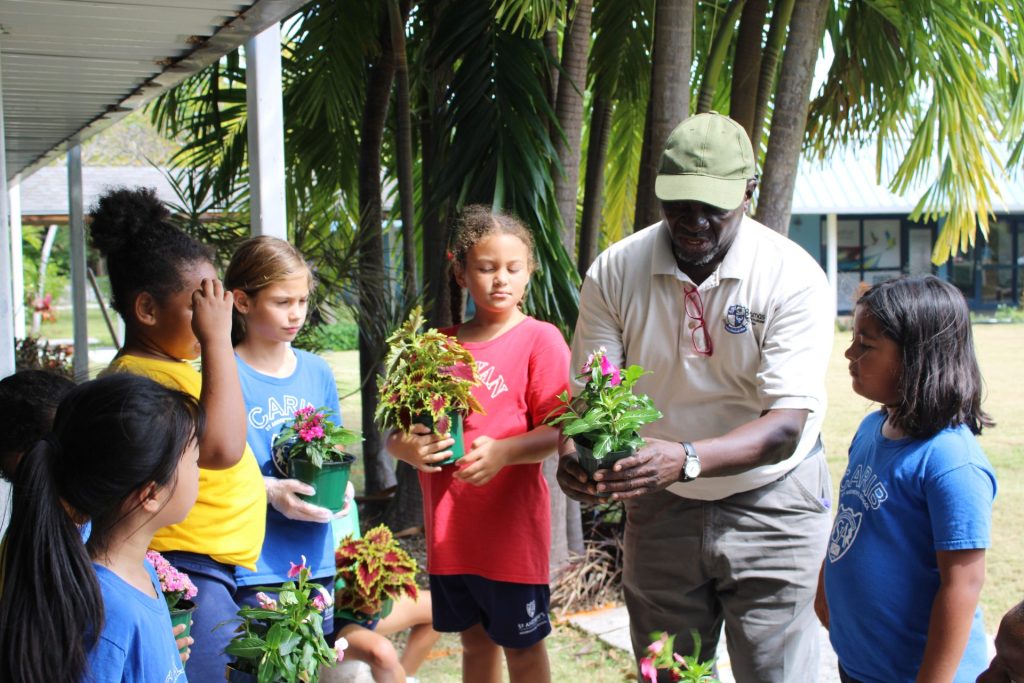
Students across every division contribute: planting and composting in the Early Learning Centre, reducing single-use plastics in the Primary School, and conducting environmental audits in Secondary. The Eco Committee, made up of students and faculty, meets regularly to set measurable goals, review progress, and celebrate achievements such as waste-reduction milestones and campus clean-ups.
Clean, Green, and Pristine Campus
Our environmental commitment can be seen across the physical campus. St Andrew’s launched a landmark solar energy installation beside the Secondary changing rooms — a project designed to meet half of the school’s daily power needs. This investment reflects our belief that schools should model the sustainable future they teach.
Supporting infrastructure projects include improved waste management, sustainable landscaping with native palms, and upgraded water-efficient facilities. Even building renovations, such as the multi-stage Secondary bathroom renewal, were planned with durability and energy efficiency in mind. Together, these projects create a cleaner, more resource-responsible environment for learning.
Learning for a Sustainable Future
Environmental education at St Andrew’s is inquiry-driven and action-based. Teachers integrate sustainability themes into science, social studies, languages and the arts. Students examine real-world issues such as renewable energy, marine conservation, and climate resilience — all highly relevant to island life in The Bahamas.
The International Baccalaureate framework reinforces these aims by encouraging students to explore global challenges through local lenses. Inquiry questions such as How do our choices affect the environment?” or “What can our community do to protect coral reefs?” connect academic learning with ethical decision-making. Fieldwork on local coastlines, recycling audits, and design projects addressing energy use allow students to turn ideas into tangible impact.
Community Partnerships and Action
Sustainability at St Andrew’s extends beyond the campus gates. The school frequently partners with local organisations and alumni to advance environmental awareness across The Bahamas.
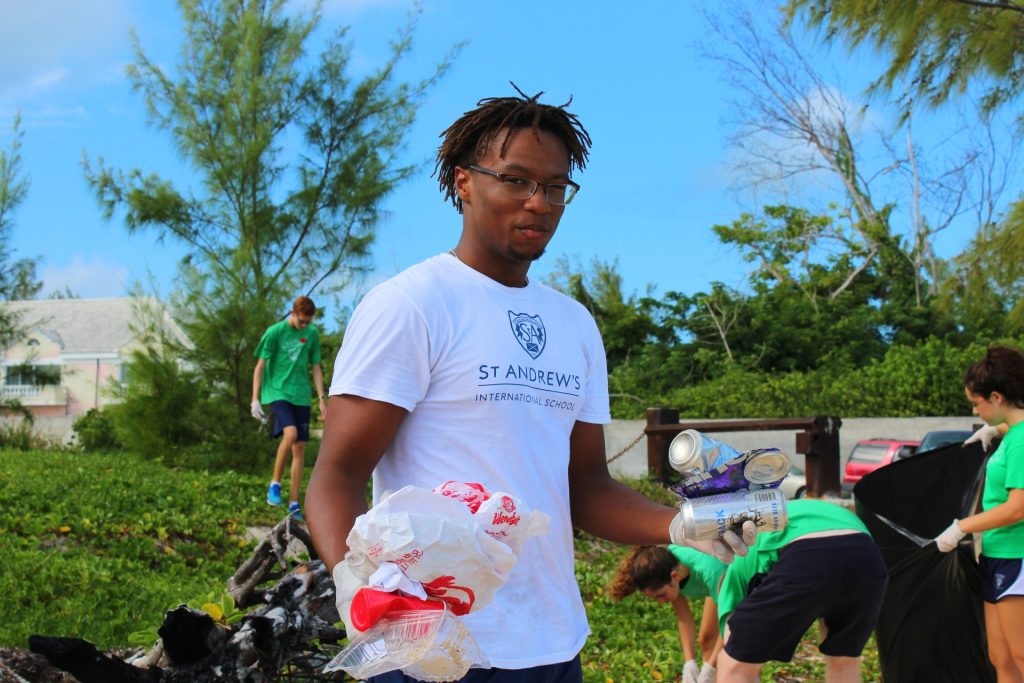
Recent efforts have included supporting community clean-ups, beach restoration, and awareness events promoting responsible coastal living.
Through these collaborations, students see how their actions link to national and global goals — including the UN Sustainable Development Goals on clean energy, responsible consumption, and life below water.
The establishment of the new Alumni & Development Office has strengthened opportunities for partnerships that promote long-term environmental stewardship. Graduates working in science, business, and education continue to share expertise and volunteer in sustainability initiatives, modelling lifelong commitment to positive change.